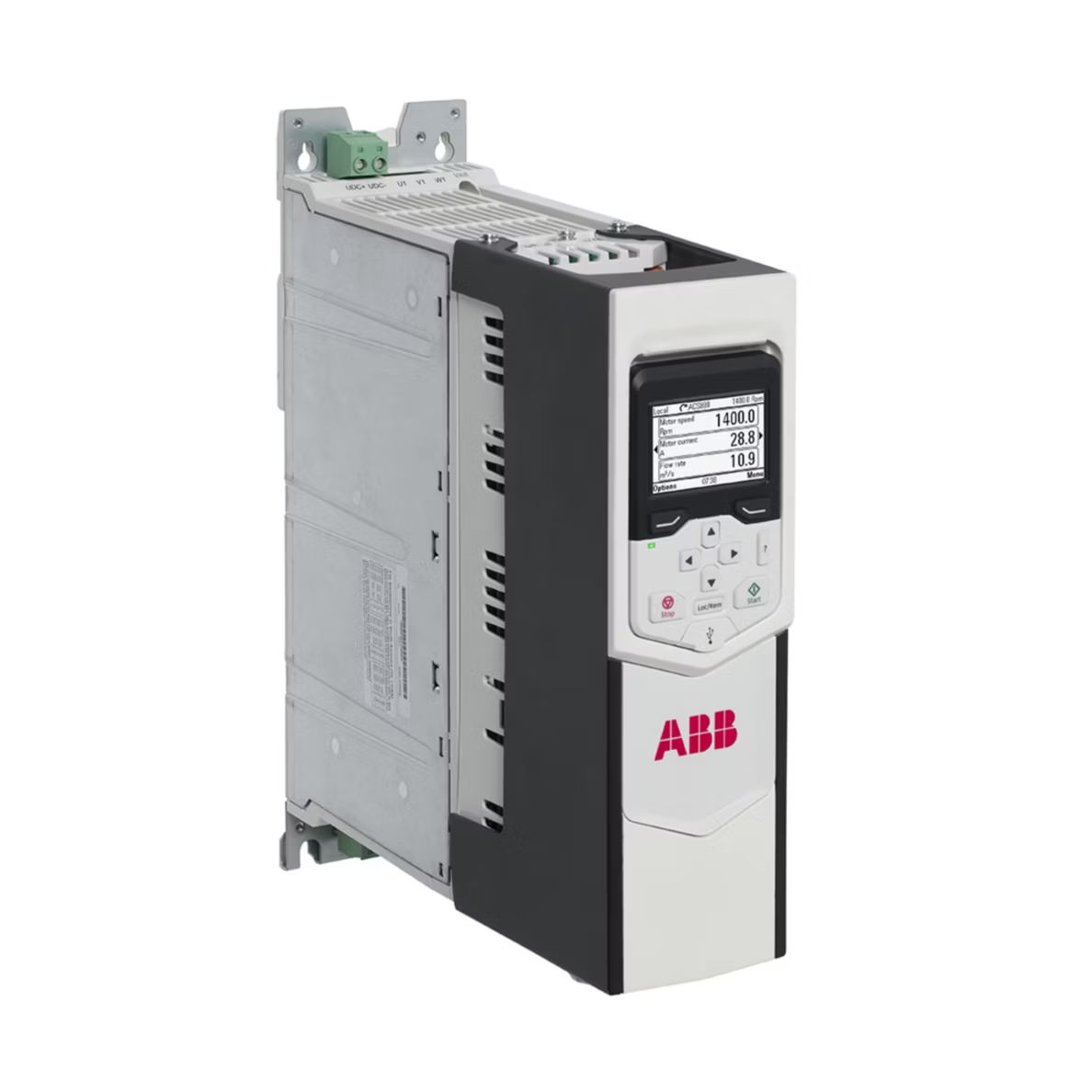

Why a drive or servo amplifier that sat on the shelf for years can fail at the first power-up
20 Nov 2026
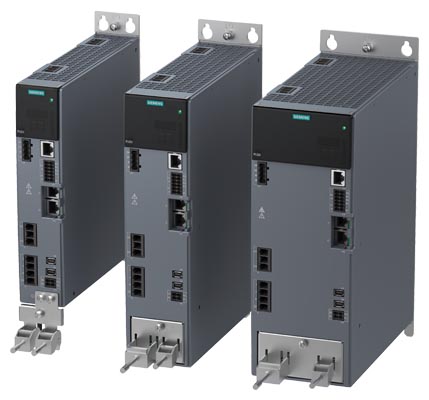
What happens inside a drive on the shelf
Most drives and servo amplifiers have aluminium electrolytic capacitors in their DC link. Their insulating layer is a very thin oxide film, kept in shape by the voltage applied during operation.
When the unit stays without voltage for a long time, this film slowly weakens. At the first power-up the capacitors then draw a much higher leakage current than normal, heat up and can be damaged.
ABB puts it plainly in its reforming instructions: without reforming, the capacitors can get damaged when the converter starts to operate.
How long is too long
The limits differ by manufacturer. They are counted from the date of manufacture, not from the date of purchase:
- ABB: reforming is needed when the converter has been non-operational for a year or more.
- Siemens SINAMICS G150: the DC link capacitors have to be reformed when the unit has been in storage for more than two years.
- Schneider Electric Altivar Process: 12 months at a maximum storage temperature of 50 °C, 24 months at 45 °C, 36 months at 40 °C.
- Danfoss: capacitor conditioning can be carried out when the drive has been idle for more than a year.
A warm storeroom shortens the safe period, as the Schneider Electric figures show.
How to find the age of a unit
The manufacturing date is coded in the serial number on the rating plate. ABB writes that the serial number defines the week of manufacture, and Siemens that the date of manufacture is indicated in the serial number on the type plate. The manual of your unit explains how to read it.
A new drive bought from stock can already be more than a year old.
What reforming is, and what it is not
Reforming is not a repair. It is a storage and commissioning procedure that the manufacturers describe for the owner of the unit, in their operating and hardware manuals.
The dielectric of an aluminium electrolytic capacitor is a thin layer of aluminium oxide on the anode foil. It is grown electrochemically during manufacturing, by applying a voltage to the foil in the electrolyte. This production step is called forming.
During storage without voltage, the oxide slowly degrades in contact with the electrolyte, faster at high temperature, and the leakage current rises.
When voltage is applied again, the leakage current flowing through the weak spots rebuilds the oxide, by the same electrochemical process as in the factory. Hence the name: the dielectric is re-formed. Done slowly, with a limited current, this happens without heating.
If the full mains voltage is applied at once, the high leakage current flows for as long as the drive is on, because the pre-charge circuit only limits the initial charging current. The capacitor heats up, the electrolyte produces gas, and the capacitor bulges, opens its vent or shorts, sometimes taking the input rectifier with it.
That is why the simplest method of the manufacturers works: the drive is powered with its supply voltage and no motor running, for 30 minutes (ABB, Siemens) to one hour (Schneider Electric), with no run command possible. Without load, the current in the capacitors is little more than their leakage current, which rebuilds the oxide.
Units stored for longer may need a slower reforming, with a current-limited DC supply or resistors in series, as described in the manufacturer's instructions. These procedures are carried out by qualified personnel, following the manufacturer's document for that exact unit. The DC link stays charged after the supply is switched off.
Keeping spare units ready
- Note the manufacturing date of every spare drive and servo amplifier in your stock.
- Power them regularly: Schneider Electric recommends supplying the drive with line voltage at least once a year, for one hour if possible.
- Keep them in a dry storeroom at a moderate temperature.
- Before installing a spare that is past the limit, reform it according to the manufacturer's instructions.
Coming soon: we are preparing a reforming and test service for stored spare drives in our workshop. It is not available yet. If you have spare units to prepare, write to us and we will let you know as soon as it is.
When the first power-up has already gone wrong
If a stored unit failed at the first power-up, the DC link capacitors are often damaged, and sometimes the input rectifier or the pre-charge circuit with them.
A component-level repair replaces the failed components and tests the unit before it goes back, instead of replacing the whole drive.
Send it with its serial number, how long it was stored and what happened at power-up. The repair request form has fields for this.
This article is general information. Always follow the manufacturer's manual and the safety rules of your site.